
A Practical Guide To Getting Your Content Found in AI Search
Key Takeaways
- AI search rewards content that’s easy to extract and trust. ChatGPT, Perplexity and Google’s AI features pull from content written in plain language, organised around real questions and marked up with schema. Clear, specific answers beat polished marketing copy.
- Your AI visibility is decided off your website as well as on it. Large language models draw on YouTube, Reddit, Quora and trusted third-party sites. Video, genuine community contributions and digital PR all shape whether your brand appears in AI answers.
- Start with real customer questions and repeat the process. Pick three core questions (price, process, problems), write the best answer online, turn it into a short video, add FAQs and schema, share it where your audience is, then do the next three. Using this approach, we’ve seen clients grow their LLM referrals by up to 600%.
Traditional Google search isn’t the only place customers go for answers anymore. Tools like ChatGPT, Perplexity, and Google’s AI Overviews are changing how people search and how your business gets found.
If someone asks ChatGPT, “What’s the cheapest way to build a house in Melbourne?”, it blends information from blogs, videos, FAQs, and trusted sources across the web to produce a synthesised response. That means you need to put effort, time, and resources into evolving your content strategy to ensure you are discoverable.
If your content doesn’t appear in AI-driven answers, you risk being invisible to customers who no longer rely on the traditional Google search experience. Early movers who adapt their content for LLMs will dominate these new search experiences and that opportunity is now.
This guide will show you how to create content that LLMs understand, trust, and reference, with practical steps you can start using immediately.
Multi-Modal Content Is Key
LLMs prefer content that answers questions in the formats users love most. For many queries, that’s video.
For example, when we tested “best European cruises for families”, Google’s AI Overviews pulled in YouTube videos, alongside blogs with step-by-step instructions.
This is a good example of why you cannot solely rely on text blogs anymore. You should repurpose your blog content into a short video review or interview in Q&A style that can be uploaded to YouTube with an accurate transcript, then add that transcript back to your blog.
This achieves two things:
- Signals to AI that you have expertise across multiple formats.
- Provides clear, structured content that models can interpret easily.
This is The Perfect Cruise for Kids AND Grandparents
Structure Matters More Than Ever
AI models love clarity. That means:
- Use plain language, not marketing fluff.
- Break content into natural question-and-answer sections.
- Add schema markup (like FAQ or How To) so search engines and LLMs can process it easily.
For example, a post titled “How the Small Lot Housing Code Impacts Melbourne Builds” with FAQs like “Do I need a permit for a 150m² lot?” has a much better chance of appearing in Google’s AI Overviews than a generic “Our Building Services” page.
Don’t Ignore Sites Like Reddit
One of the biggest blind spots businesses have is ignoring platforms like Reddit, Quora, or niche community forums. These sites are goldmines for AI models because:
- They’re full of real user questions written in natural language.
- They provide authentic, peer-driven answers that models view as trustworthy.
- They often surface long before polished brand content, especially for early-stage or niche queries.
If people are already asking about your industry on Reddit, and your brand isn’t part of that conversation, you’re missing a chance to shape the answers AI tools deliver. At a minimum, you should be monitoring these discussions, and ideally contributing helpful, non-salesy insights that demonstrate expertise.
Start With the Questions Your Customers Actually Ask
AI tools don’t just summarise the web, they try to answer questions. So if your content is built around those questions, you’re already halfway there.
Spend time listing the exact phrases your customers use in calls, emails, or search bars. Tools like Google’s People Also Ask, Reddit threads, and even ChatGPT can also help you find these.
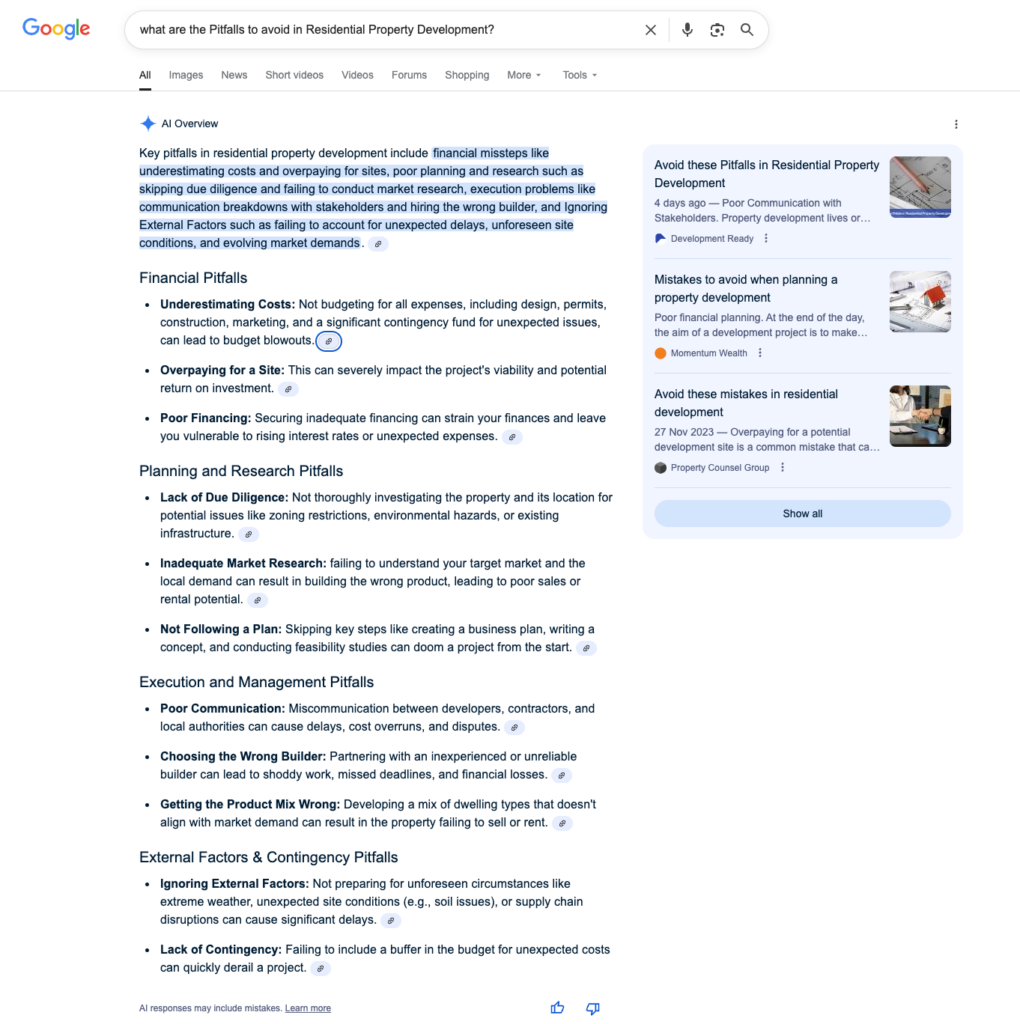
If you know your audience wants to know “what are the Pitfalls to avoid in Residential Property Development?” then that question should be in your headline, in your FAQ section, and in your video script.
The brands that win here aren’t guessing, they’re writing the answers their customers are already looking for.
Authority Still Wins the Game
AI tools prioritise trustworthy voices. If your business gets quoted in a publisher site or high DA site, you’ll often see that content appear in AI-generated answers. That’s why digital PR isn’t optional, it’s part of an LLM strategy.
Even on your own website, show real experience: photos of projects, cost breakdowns, and advice from named experts in your team. The more proof that you know what you’re talking about, the better.
How Do You Track All This?
Right now, there’s no universal dashboard for “AI rankings” like we have for SEO, but tools are emerging. At Lamington, we’re using SEMrush’s AI tracking features to monitor how our clients’ content appears in LLMs like ChatGPT and Google’s AI Overviews.
For a simpler approach, you can also do a manual check once a month: ask ChatGPT and Google’s AI Overviews the questions your customers typically ask. See if your brand comes up. If not, ask why: Do you have the best, clearest, most complete answer out there?
So Where Do You Start?
If you’re an owner or marketer, here’s a simple plan that works:
- Pick three core questions your customers ask (price, process, problems).
- Create a detailed blog post that answers them better than anyone else.
- Turn that post into a short video with captions.
- Add FAQs and schema to your site.
- Share it on channels where your audience is active.
Then repeat. That’s it.
Want your content to show up where customers are searching—whether that’s Google, ChatGPT, or the next big AI tool? At Lamington, we’re already building strategies to make that happen, helping our clients achieve up to 600% growth in LLM referrals. Get in touch and let’s future-proof your online discoverability.
Frequently Asked Questions
The foundations are the same: technical health, authority and helpful content all still matter. The difference is the goal. Traditional SEO aims to rank a page for a keyword. AI search optimisation aims to have your content cited inside a generated answer. That means writing in natural question-and-answer formats, giving direct answers early, backing up claims with evidence, and being present on the other platforms AI tools learn from, such as YouTube, Reddit and industry publications.
They’re full of real questions written in natural language, answered by real people. That’s exactly the kind of content AI models treat as authentic and useful, and it often shows up for niche queries before brand content does. At a minimum, monitor the threads in your category. Better still, have your experts give real answers there without a sales pitch. Anything that reads like an ad gets downvoted and ignored.
There’s no single “AI ranking” report yet, but the tools are catching up quickly. SEO platforms such as Semrush and SE Ranking now track brand mentions and citations across ChatGPT, Google AI Overviews and other AI engines. For a simple start, ask ChatGPT, Perplexity and Google your top customer questions each month, note whether your brand is mentioned or cited, and track AI referral traffic in GA4.