
Why your website is not being indexed by Google and how to fix it
Key Takeaways
- If a page isn’t indexed, it can’t be found. Discovery, crawling and indexing are three separate steps, and Google finds many more pages than it chooses to index. A page that isn’t indexed can’t rank, bring traffic or appear in AI search results, however good its content is.
- Indexing problems are usually structural. On large or growing websites, especially property, ecommerce and service businesses with listing or filter pages, low-value and duplicate URLs use up Google’s crawl budget and push out the pages that matter. Robots.txt rules, noindex tags and sitemaps that contradict each other make it worse.
- Fix the foundations before you add more content. Decide which pages deserve to be indexed, remove or consolidate the rest, strengthen internal linking and get your technical settings consistent. Publishing more pages on a site with shaky indexing makes the problem bigger.
If your website or key pages are not being indexed by Google, they will not appear in search results, no matter how strong the content or how competitive the keywords.
Indexing is the foundation of organic visibility. Before rankings, traffic or conversions are possible, Google must first discover, crawl and choose to index your pages. When this process breaks down, businesses often invest more in content or paid media without realising the underlying issue is structural. This blog explains why websites are not being indexed by Google, what this means for growth, and how businesses should approach fixing indexing issues properly rather than relying on short term fixes.
How Google discovers, crawls & indexes websites
Google uses automated systems to discover pages, primarily by following links and reading sitemaps. Discovery simply means Google is aware that a page exists. Crawling happens when Googlebot visits that page to understand its content and technical signals. Indexing is the final step, where Google decides whether the page is stored in its index and made eligible to appear in search results.
A common misconception is that discovery or crawling guarantees indexing. It does not. Google discovers far more pages than it indexes, particularly on large or complex websites. Indexing is a quality and prioritisation decision made by Google based on page value, uniqueness, internal signals and crawl efficiency.
Site structure and internal linking play a major role in how Google prioritises pages. Pages that are clearly linked, sit within a logical hierarchy, and are supported by strong internal signals are easier for Google to evaluate and index consistently. Poor structure, excessive URLs or unclear page purpose make indexing far less reliable.
Common reasons websites are not being indexed by Google
There are several recurring causes behind Google indexing issues, and they are usually technical or structural rather than content quality problems.
Technical barriers are one of the most direct causes. Robots.txt files can unintentionally block important sections of a site, while noindex tags may be applied too broadly or inherited across templates. In these cases, Google is explicitly told not to index pages, even if those pages are commercially important.
Crawl budget limitations are another major factor. Google allocates a finite amount of crawl activity to each site. When a website generates large volumes of low value, duplicate or near duplicate pages, Google spends its time crawling those URLs instead of prioritising important pages. This is often referred to as index bloat and it commonly affects listing based, ecommerce and content heavy websites.
Sitemap and URL management issues also contribute to indexing problems. Sitemaps often contain pages that should not be indexed, are blocked elsewhere, or provide little value. Being listed in a sitemap does not guarantee indexing. It simply suggests pages to Google. Google will still make its own decisions based on the overall quality and structure of the site.
Understanding Google Search Console indexing statuses
Google Search Console provides insight into how Google is treating your pages, but the terminology can be confusing. Statuses such as discovered but not indexed and crawled but not indexed indicate that Google knows about a page and may have visited it, but has chosen not to include it in the index.
Discovered but not indexed often points to prioritisation issues. Google has seen the URL but has not allocated crawl resources to it yet, commonly due to crawl budget constraints or low perceived value. Crawled but not indexed suggests Google has reviewed the page but decided it does not add enough unique value to warrant indexing.
Repeatedly submitting pages for manual indexing may result in short term improvements, but it does not address the underlying cause. If Google’s systems continue to see structural inefficiencies or low value signals, pages will fall out of the index again over time.
Why indexing problems increase as websites scale
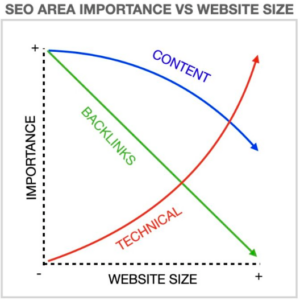
Indexing issues tend to become more severe as websites grow. This is especially true for property, construction, ecommerce and service based businesses that generate large numbers of URLs through listings, filters, locations or variations.
As sites scale, poor page handling becomes more visible. Similar pages compete with each other for crawl attention. Internal linking weakens. Google struggles to identify which pages are most important. Over time, this leads to volatile indexing, where pages move in and out of the index after technical changes or content updates.
Heavy reliance on noindex tags is another common response to scale, but it often creates new problems. When noindex is applied at scale without a clear strategy, important pages can be excluded accidentally, while low value pages remain crawlable. This increases crawl inefficiency rather than reducing it.
How to fix Google indexing problems properly
Fixing indexing issues requires a structured approach rather than isolated fixes. The first step is establishing clear page value and hierarchy. Businesses need to decide which pages should be indexed, which should exist but remain unindexed, and which should not exist at all. This decision should be driven by user intent and commercial value, not by technical convenience.
Improving crawl efficiency is critical. Reducing unnecessary URLs, consolidating duplicate content, and strengthening internal linking all help Google focus on the pages that matter. When Google can crawl fewer, higher quality pages, indexing becomes more consistent.
Technical controls must also be aligned. Sitemaps, robots.txt rules and noindex usage should work together, not contradict each other. Sitemaps should reflect indexable intent, robots.txt should guide crawl behaviour at scale, and noindex should be used selectively rather than as a primary control mechanism.
What to prioritise before investing more in content
Content is essential for growth, but it cannot compensate for broken indexing. When important pages are not being indexed reliably, publishing more content often increases crawl pressure and worsens the problem.
You should prioritise technical cleanup and indexing stability before scaling content production. Signs this is required include large numbers of non indexed pages, frequent indexing regressions after changes, and reliance on manual indexing requests. Once indexing is stable, content investment delivers far greater return because Google can consistently discover and index new pages.
Indexing is the gateway to organic growth. When Google struggles to index a website, visibility, traffic and leads all suffer, regardless of how strong the content may be. For Australian businesses, especially those with large or complex websites, indexing problems are usually a symptom of structural and technical inefficiencies rather than a lack of effort.
Addressing these issues requires clarity around page value, disciplined technical controls, and a focus on crawl efficiency. When the foundations are right, indexing becomes predictable and scalable, allowing content and authority building efforts to perform as intended. Lamington Digital works with growing businesses to diagnose and resolve complex indexing challenges, helping ensure their websites are structured for sustainable search performance rather than short term fixes.
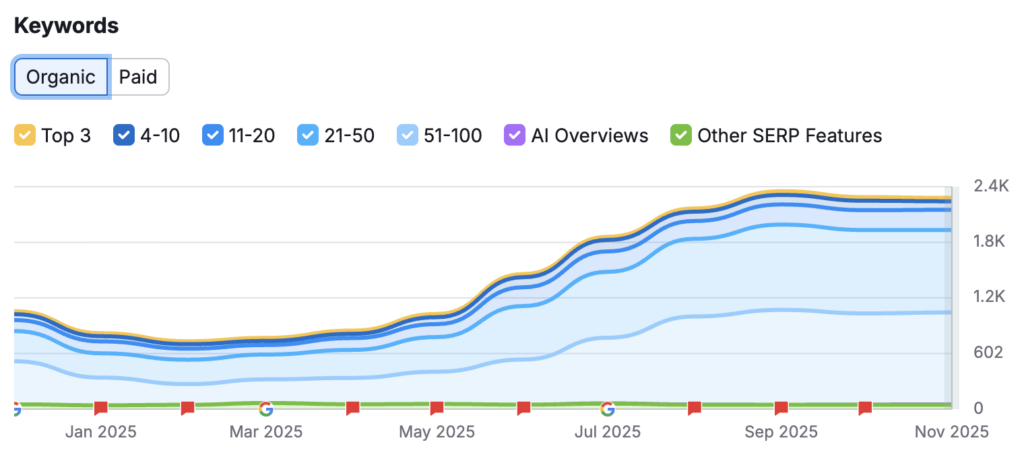
In this example the client was working with an agency who was prioritising content when there were indexing issues impacting the site, and as a result the client was getting no growth. When indexing issues were rectified Google began indexing all pages leading to growth in indexed pages, number of keywords and traffic.
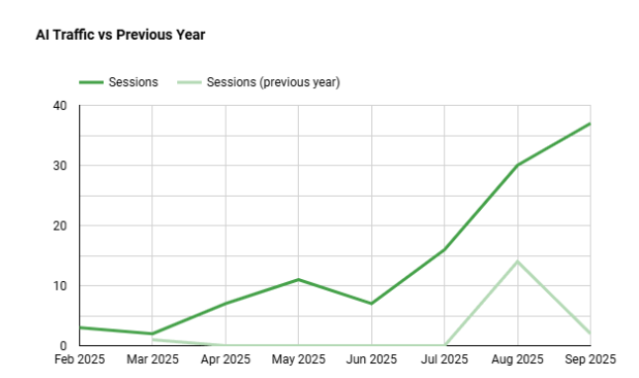
The client also benefited from significant LLM session growth once indexing issues were resolved.
Frequently Asked Questions
Use Google Search Console. The Page indexing report shows how many pages are indexed, how many aren’t, and the reason for each excluded URL. To check a single page, use the URL Inspection tool, which shows whether it’s indexed, when it was last crawled and whether anything is blocking it. A “site:yourdomain.com.au” search in Google gives a rough idea, but it isn’t accurate enough to rely on.
They do different jobs, and mixing them up is a common cause of indexing problems. A noindex tag tells Google not to show a page in search results. Robots.txt tells Google not to crawl it. If you block a page in robots.txt, Google can’t see its noindex tag, and the URL can still turn up in search results without a description. Use noindex for pages you want kept out of search, and robots.txt for sections Google doesn’t need to crawl at all, such as filter parameters or internal search results.
Yes. Google’s AI Overviews and AI Mode draw on Google’s index, so pages that aren’t indexed can’t be cited there. Other AI tools also rely on search indexes and crawlable content. One client of ours saw strong growth in sessions from AI tools once their indexing issues were fixed. As AI search grows, technical indexing health is where visibility starts.